
IP54 vs IP55 vs IP65: What Protection Rating Does Your Commercial EV Charger Really Need?
Short answer
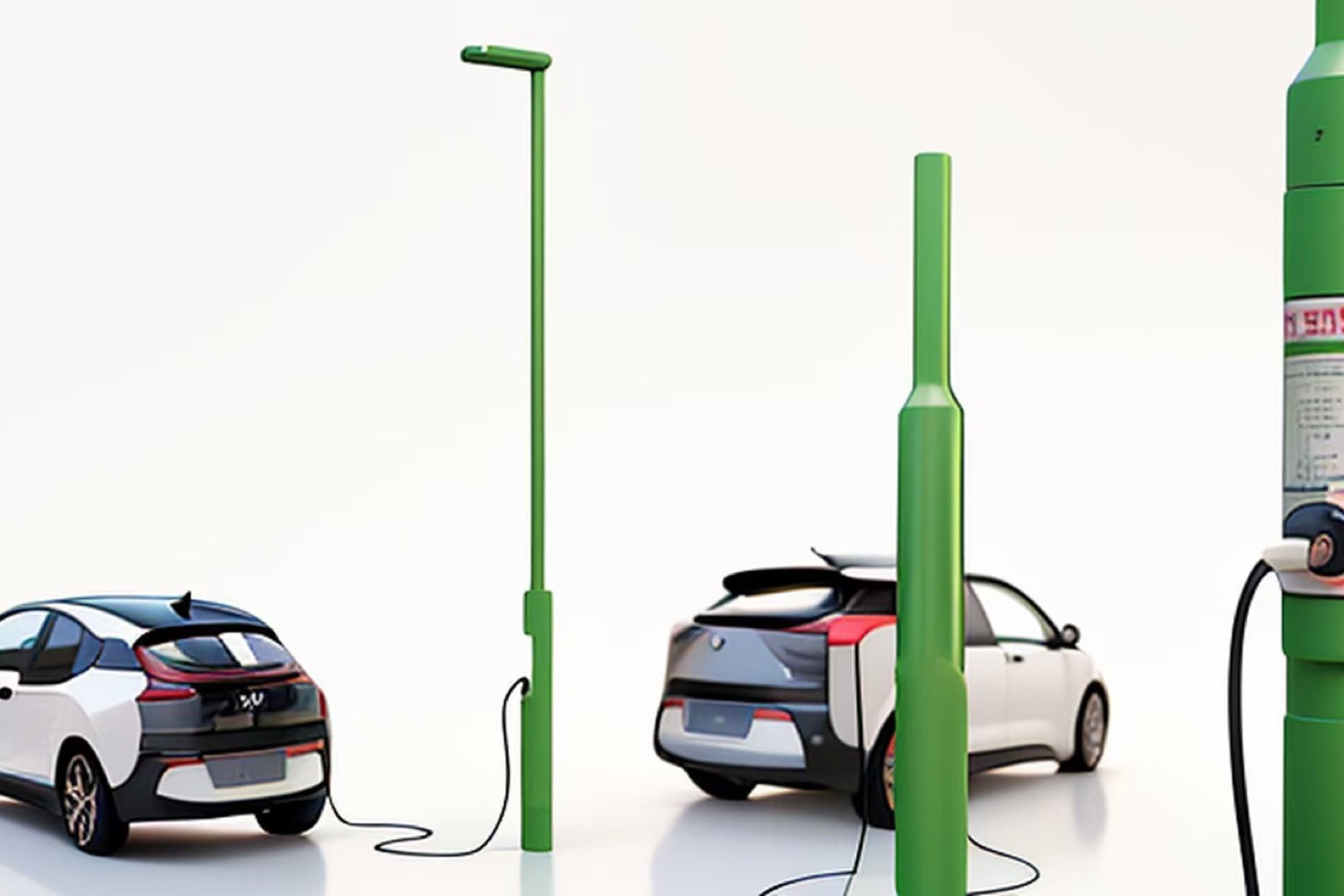
IP54, IP55 and IP65 all protect a commercial EV charger against dust and water, but they do not protect against the same things. IP54 covers splashing water and is the practical minimum for a sheltered or semi-sheltered outdoor installation. IP55 adds protection against low-pressure water jets, which matters when a unit will be hosed down or hit by wind-driven rain at an angle. IP65 adds dust tightness and protection against stronger jets, and is the usual choice for fully exposed wall-mounted units on car park walls and building facades.
What you actually need depends on three things: where the unit is mounted, how it will be cleaned, and how much wind-driven rain it will see. It does not depend on which number is highest.
What the two digits actually mean
An IP code has two digits, and they are independent. The first digit describes protection against solid objects and dust, running from 0 to 6. Level 5 means dust protected: dust can enter, but not in a quantity that interferes with operation. Level 6 means dust tight: no dust ingress under the test conditions. For an outdoor charger, the difference between 5 and 6 rarely decides a project.
The second digit describes protection against water, running from 0 to 8. Level 4 is water splashing from any direction. Level 5 is a water jet projected by a nozzle from any direction. Level 6 is powerful water jets at higher pressure and volume. Levels 7 and 8 add temporary and continuous immersion.
Two things are easy to forget. First, these are laboratory tests on a sample in a specific configuration. Second, an IP rating is a statement about a tested unit, not a promise about your site. A correctly rated charger installed with a badly sealed cable entry is simply a charger that will fail.
IP54, IP55 and IP65 side by side
| Rating | Dust | Water | Where it is normally specified | What to watch |
|---|---|---|---|---|
| IP54 | Dust protected | Splashing water from any direction | Sheltered car parks, canopies, indoor or semi-enclosed areas, portable units | Not enough for direct jet washing or strong wind-driven rain |
| IP55 | Dust protected | Water jets from any direction | Outdoor units on poles, lamp posts and walls with partial shelter | Still relies on correct sealing of every opening and gland |
| IP65 | Dust tight | Water jets at higher pressure and volume | Exposed wall-mounted units on facades and open car park walls | Fully sealed enclosures can trap condensation without pressure equalisation |
| IP66 | Dust tight | Powerful water jets | Heavy wash-down environments, industrial and depot sites | Higher sealing usually means less airflow and more heat |
| IP67 | Dust tight | Temporary immersion | Flood-prone or low-lying locations | Rarely required for EV charging and rarely tested with the connector mated |
If you compare product data sheets across suppliers, this table is where most of the confusion comes from. A unit described as “outdoor rated” can mean anything from IP44 to IP66, and the difference shows up two winters later.
Why a higher number is not automatically better
It is tempting to write IP66 into a specification and consider the question closed. In practice, a higher rating buys you water resistance and costs you something else.
The first cost is heat. Sealing an enclosure stops water getting in and also stops heat getting out. AC wallboxes dissipate relatively little heat, so a fully sealed IP65 housing is straightforward.
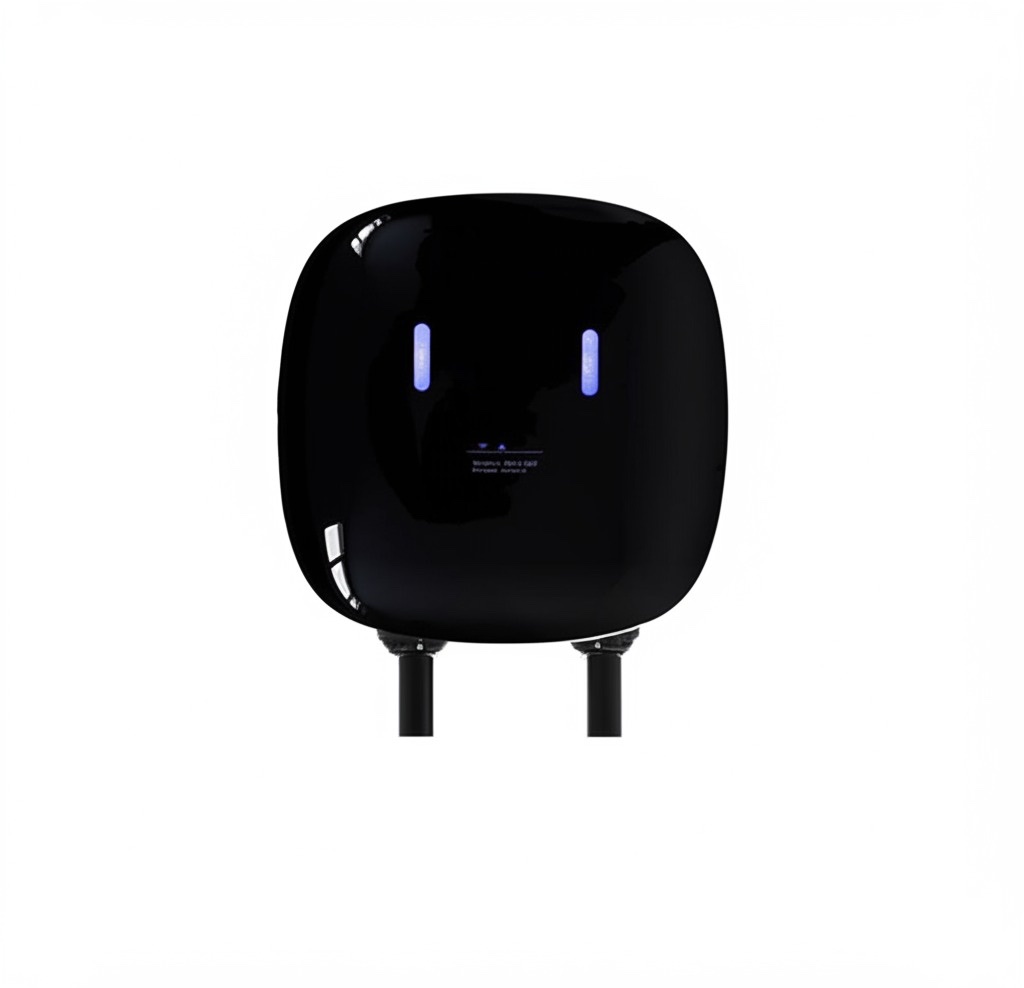
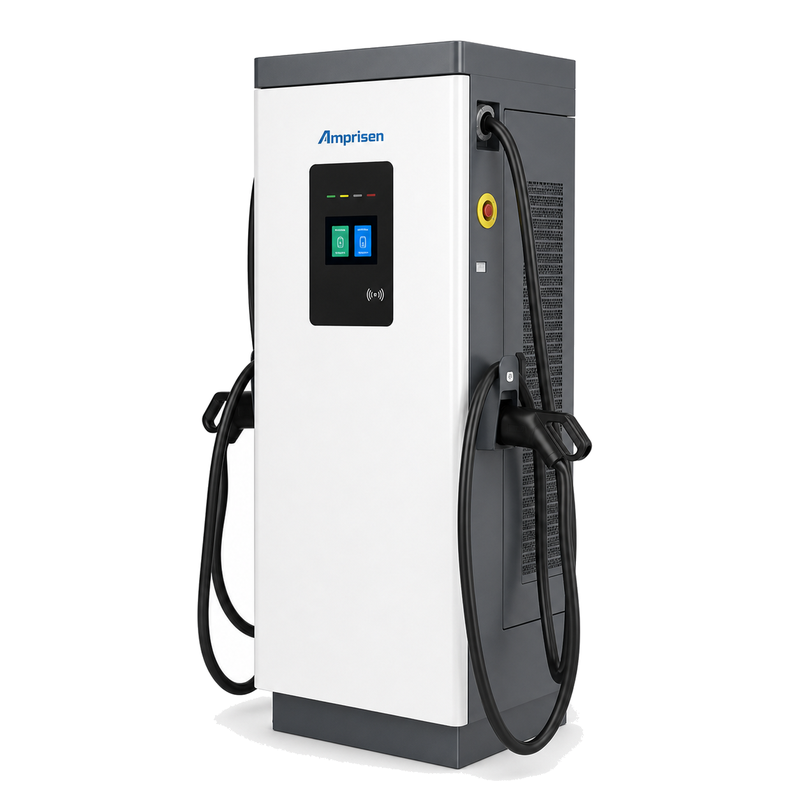
DC fast chargers are a different problem. The power modules, magnetics and filters inside a DC cabinet generate serious heat, which is why most DC cabinets use filtered ventilation rather than a fully sealed shell. That is one reason a DC fast charger is commonly specified at IP54 with a filtered air path, while an AC wallbox on the same site is specified at IP65.
The second cost is condensation. A sealed enclosure that cycles between a warm day and a cold night will pull moisture out of the air inside it. Water then collects on the coldest surface, which is usually the electronics. This is why pressure equalisation elements and breather membranes exist, and why a well-designed IP54 cabinet with managed airflow can outlast a cheap IP66 box with no condensation strategy at all.
The third cost is serviceability. Every gasket, gland and screw boss is a potential leak, and every time a unit is opened for service the sealing surfaces are disturbed. A design with fewer openings and a documented gasket kit is worth more than an extra digit on the data sheet.
The rating covers the enclosure, not the plug
This is the single most common misunderstanding in outdoor charging projects. The IP rating on the data sheet describes the charger body. It says nothing about the connector, and the connector is usually the lowest-rated point in the chain.
A Type 2 connector is typically rated around IP44 when mated, and it is unprotected when it is lying on the ground or hanging in a holster. Water sitting in an unmated connector causes corrosion on the pins, and corrosion on the control pilot contact produces the intermittent faults that are hardest to diagnose: a charger that works perfectly in dry weather and refuses to start after rain.
Three practical measures reduce this risk. Specify socket outlets with spring-loaded shutters and a tethered cap. Specify a holster that drains and holds the plug at an angle rather than a flat pocket that collects water. And confirm with the supplier how the connector behaves in the rest state, not only during charging, because the rest state is where a public charger spends most of its life.
IK rating: the failure mode people forget
IP codes cover dust and water. They say nothing about impact, which is a separate code: IK. IK08 corresponds to 5 joules of impact energy and IK10 to 20 joules. For a public car park, a depot or a kerbside installation, impact is a realistic risk from trolleys, doors, bicycles, vandalism and snow-clearing equipment.
A unit with a good IP rating and a weak IK rating is still a maintenance liability. For exposed public sites, specify IK10 on the enclosure and confirm which parts of the unit the rating covers, since a plastic display window and a metal housing do not have the same resistance.
Site conditions that should move you up or down a rating
Rather than defaulting to the highest number, work through the conditions the unit will actually meet.
- Shelter. Under a canopy or inside a multi-storey car park, IP54 is normally sufficient. On an exposed wall facing the prevailing wind, IP65 is the sensible baseline.
- Cleaning method. If facilities staff will pressure wash the bay, an IP54 unit will not survive it. Either specify a higher rating or document a cleaning method that the installed unit can actually tolerate.
- Coastal and de-icing salt. Chlorides attack enclosures, fixings and connectors. Look for corrosion-resistant fixings and confirm the enclosure material, not only the IP number.
- Temperature range. Outdoor cabinets need to operate across a wide band. A typical DC fast charger is specified from about -30 °C to +50 °C, with humidity up to 95% non-condensing and an altitude limit around 2,000 m. Verify these against your site instead of assuming them.
- Standing water. If the bay floods, a plinth or raised mounting is more effective than a higher IP digit.
- Solar gain. A dark enclosure in direct summer sun runs hotter than the ambient temperature. This interacts directly with the heat problem described above.
Installation details that matter more than the number
Most ingress failures are installation failures. Before you compare IP codes, check that the project will be built correctly.
- Cable entry. Use the correct gland for the cable diameter and seal it properly. Silicone around a cable is not a seal, and it hides the problem until the first heavy rain.
- Orientation and water shedding. Mount so that water runs away from openings, glands and the display. Avoid mounting a unit so that a flat top surface or an upward-facing gland collects water.
- Drainage. Do not create a pocket that traps water against the base of the unit.
- Torque and gaskets. Cover screws have a specified torque for a reason. Over-tightening deforms a gasket and creates a gap; under-tightening leaves it uncompressed.
- Service discipline. Replace gaskets and sealing elements when a unit is opened for repair, and keep a gasket kit in the spare parts list.
- As-tested configuration. The rating applies to the unit as tested. Adding a third-party metering box, an antenna or an unsealed conduit run voids the assumption behind it.
Buyer checklist for outdoor EV charger enclosures
| Mounting and shelter | Fully exposed, partially sheltered, or covered? This sets the floor for the water digit. |
|---|---|
| Cleaning regime | Cloth and hose, or pressure washer? Confirm the installed unit tolerates the method your facilities team will actually use. |
| Impact requirement | Public or restricted site? Specify IK08 or IK10 and confirm which components the rating covers. |
| Connector and rest state | Shuttered socket, tethered cap, draining holster. Ask how the plug is protected when it is not charging. |
| Environment | Temperature band, humidity, altitude, salt exposure and flood risk for the specific bay. |
| Condensation strategy | Pressure equalisation element, breather membrane or managed airflow. Ask directly. |
| Service and spares | Gasket kits, glands and sealing elements available as spare parts, with a documented replacement interval. |
| Test evidence | The IP and IK test report, not only the number printed on a marketing page. |
Frequently asked questions
Is IP65 waterproof?
No. IP65 means dust tight and protected against water jets. It does not mean the unit can be submerged or immersed, and it does not mean the unit is immune to water entering through an unsealed cable gland. Waterproof is a marketing word, not a defined rating.
Should I always specify the highest IP rating available?
No. A higher rating usually means a more tightly sealed enclosure, which runs hotter and is harder to service. For AC wallboxes the trade-off is small and IP65 is a reasonable default. For DC fast chargers the heat load makes filtered ventilation and IP54 a more common and often more reliable engineering choice. Match the rating to the site.
Does the IP rating cover the charging cable and the plug?
Generally no. The rating applies to the enclosure. Type 2 connectors are typically rated around IP44 when mated and are unprotected when unmated, so the plug is normally the weakest point of an outdoor installation. This is a specification detail worth raising with your supplier before you order.
Do I need IK10 for a commercial car park?
For an open public site, yes — specify IK10 on the enclosure. IK08 may be adequate in a controlled depot or a staff car park where vehicles and pedestrians are managed, but the cost difference is usually small compared with a single damaged unit.
Does the IP rating replace certification?
No, they answer different questions. IP and IK describe environmental and mechanical protection. Product safety and market access come from the applicable standards and conformity routes, such as EN 61851 and EN 62196 together with CE, UKCA or CB documentation. A high IP rating on an uncertified product is not useful in Europe.
Can an IP65 charger be pressure washed?
It should tolerate a directed water jet, but pressure washing at close range can drive water past a gasket that would pass the standard test, and it can damage labels, displays and connectors. Specify the cleaning method and confirm it with the supplier rather than assuming the rating covers every cleaning practice.
What Amprisen buyers receive
Amprisen builds AC wallboxes, lamp post chargers, portable chargers and DC fast chargers for distributors, installers and fleet operators in Europe and other export markets. Our AC wallbox range is specified at IP65 with IK10 impact resistance for exposed wall-mounted installations. The lamp post AC charger is specified at IP55 with IK10 for pole and lamp post mounting in public bays. The DC fast charger is specified at IP54 with an operating range of roughly -30 °C to +50 °C, 5% to 95% relative humidity non-condensing, and an altitude limit of 2,000 m.
If you are specifying chargers for an outdoor project, send us the site conditions: mounting method, shelter, cleaning regime, temperature band and whether the location is coastal. We will confirm which enclosure rating fits the bay, provide the test evidence behind it, and advise on cable entry and connector protection so the rating survives installation.
Explore related EV charging topics
These topic links help readers and search engines connect this article with related market, product, and application pages.
Project notes for EV charging buyers
EV charging project notes and buyer guidance
Use this article to understand product selection, market standard, and project requirements before contacting Amprisen.
Main topic
AC EV Charger, B2B Buyer Guide, DC Fast Charger, EV Charger, EV Infrastructure
Product relevance
Related news category: Industry News
Next step
Share target market, connector standard, power range, quantity, certification, and backend requirements before quotation.
Buyer checklist
| Market | Residential, commercial, fleet, or public charging |
|---|---|
| Specification | Connector, power, communication, certification |
| Outcome | A clearer product shortlist and quotation request |
Related solution pages
Use these links to move from article context to actual product evaluation.