
Inside an EV Charger Factory: What European Distributors Should Audit Before Ordering
Short answer
A product datasheet tells you what a charger claims to do. A factory audit tells you whether the supplier can still deliver that charger, at the same quality, twelve months from now. Before signing a distribution agreement, ask to see the production flow, the in-house test stations, the calibration records, and the traceability system that links every serial number to its own test data. Then verify third-party reports — DEKRA, CB, or an accredited laboratory report — against the exact model you intend to buy. If a supplier cannot show you these, treat the price advantage as temporary and the supply risk as permanent.
Why factory capability decides your supply reliability
Most European distributors open the sourcing conversation with specifications: power rating, connector type, IP rating, OCPP version, and price. That is the right place to start and the wrong place to finish. Two suppliers can quote the same 11 kW wallbox with the same Type 2 socket and the same firmware, yet be worlds apart in what reaches your warehouse in month nine.
The difference is not in the datasheet. It is in the factory: how components are checked on arrival, how boards are soldered, how many units are burned in before packing, and whether a failed unit can be traced back to a specific batch of relays. Those factors decide your return rate, your installer callbacks, and your standing with the operators you supply.
The production flow: seven stages worth auditing
Every competent factory follows the same sequence. What separates a serious manufacturer is how much happens in-house, how much is documented, and how much gets skipped when orders pile up.
1. Incoming inspection and material control
Ask how components are checked before they enter the line. Relays, contactors, RCD modules, energy meters and communication modules are the parts most likely to fail in the field, and the ones most often bought on price. A factory with working incoming quality control has sampling plans, supplier certificates on file, and a quarantine area for rejected lots. If everything on the floor looks ready to build with, nothing is being rejected.
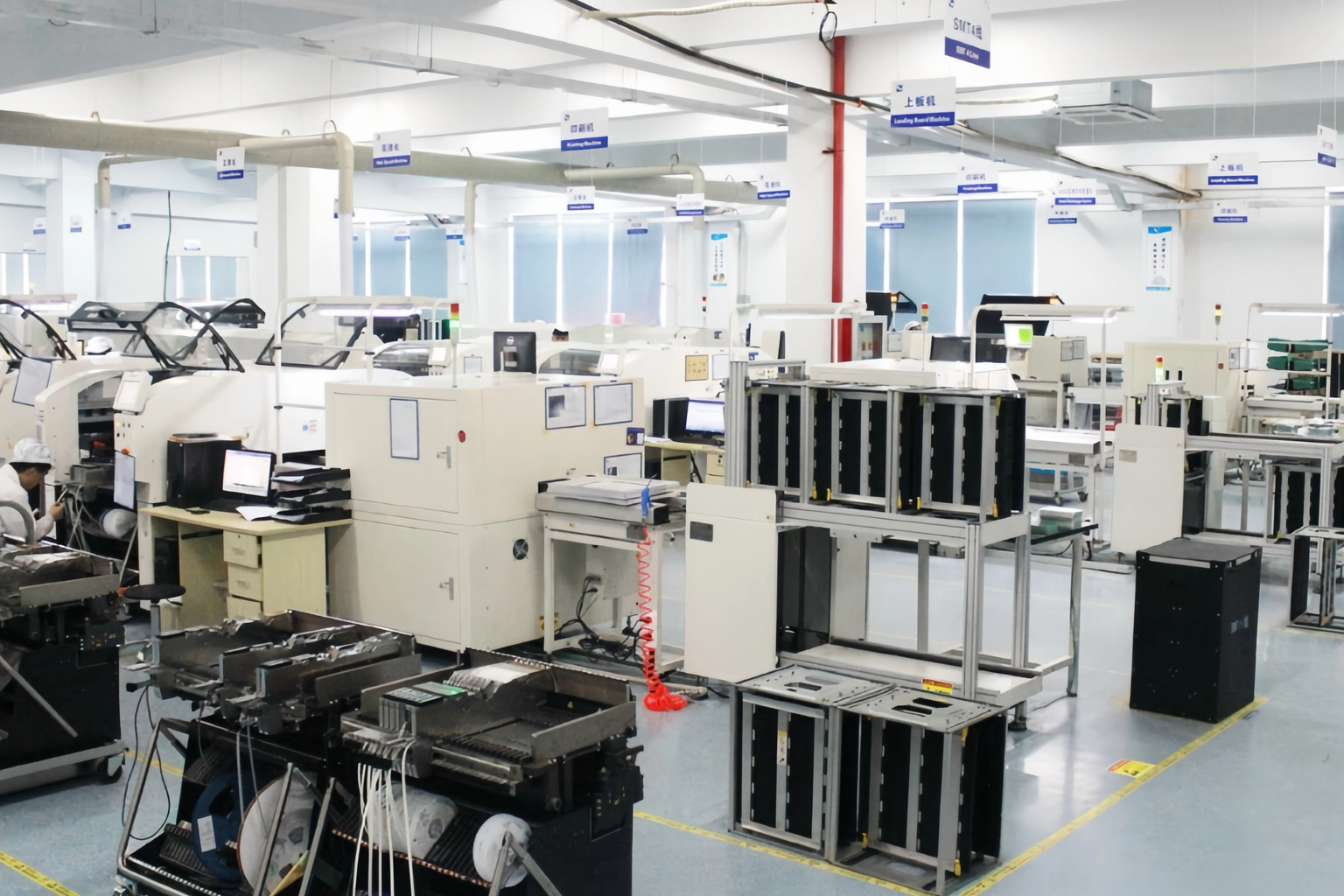
2. SMT and PCBA
Surface-mount assembly produces the controller and metering boards. Ask whether SMT is in-house or outsourced: in-house lines give you visibility into solder paste control, reflow profiles and automated optical inspection.
3. Module and cabinet assembly
This is the stage buyers can see and understand: power modules stacked into a cabinet, harnesses routed, connectors tightened, enclosures sealed. Ask for the torque specification, then check whether the bench tools are calibrated torque drivers or ordinary spanners.
4. Functional test and firmware verification
Every unit should be powered up and tested as a complete system, not only as a module: charging sequence, communication protocol, display behaviour, RFID reader, firmware version. If the answer to “how is the firmware version recorded?” is “we know which version we flashed that week”, you have no traceability.
5. Aging and burn-in test
Infant mortality is real in power electronics. Burn-in runs each unit under load for a defined period before packing, forcing early failures to appear in the factory rather than in your customer’s car park. Ask how long it runs, at what load, and whether units are monitored continuously. An unmonitored overnight soak is not a burn-in test.
6. Dielectric strength and insulation test
Safety testing is not optional. Insulation resistance, dielectric strength (hipot), earth continuity and leakage current checks confirm that the enclosure, cable and connector will not expose an installer or driver to a live part. Record the results per unit, not per batch.
7. Calibration, final inspection and packing
If the charger is used for billing, the energy meter needs a valid calibration chain. Final inspection covers cosmetic condition, label accuracy, accessory completeness and export packaging. Ask how the packaging survives a container journey.
What test equipment should actually exist on site
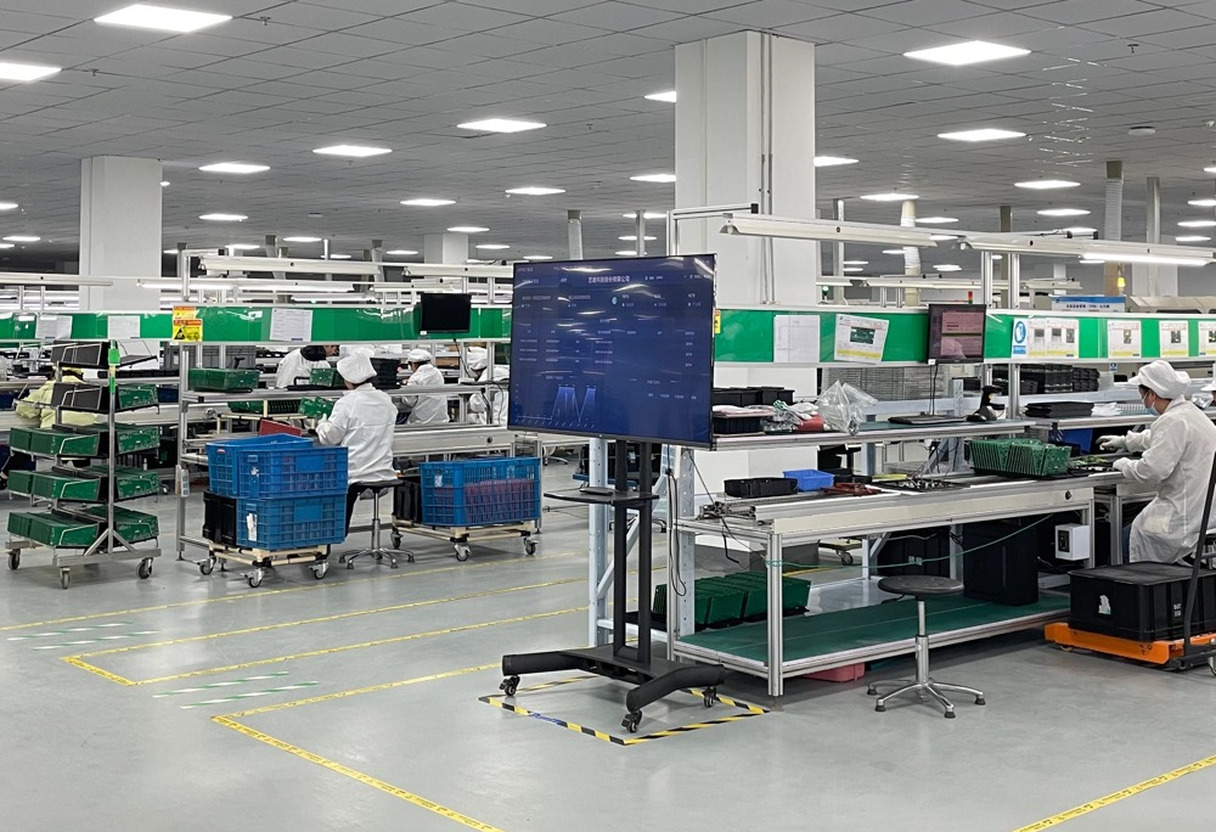
Ask to see the test area without a pre-arranged script. A factory that genuinely tests its own products will have most of the following within sight:
- Programmable AC and DC sources for simulating grid and battery conditions
- Electronic loads for sustained full-power burn-in
- Dielectric strength (hipot) and insulation resistance testers
- Leakage current and earth continuity meters
- Power analysers and reference energy meters for calibration checks
- OCPP simulators or a test back-office for protocol verification
- Environmental chambers for temperature and humidity cycling
- Ingress protection test rigs for water and dust verification
Dusty, unplugged equipment still in its packaging tells you as much as equipment that is running.
Reading a third-party test report
In-house testing is necessary but not sufficient. For European market entry you also need evidence from an accredited third party: a type test report issued under a recognised scheme, covering the exact model you are buying.
As an example of a complete report, Amprisen’s IEC 61851-1:2017 report was issued by DEKRA Testing and Certification (Shanghai) Ltd under number 6158607.50, runs to 52 pages, and names the applicant, the standard, the test procedure and the responsible laboratory. On any supplier’s report, check four things: applicant name, model designation, standard and edition, and issuing laboratory.
Traceability: serial numbers, firmware and batch records
Traceability is the difference between a quality system and a quality claim. Ask the supplier to take a finished unit off the line and show you its full record: serial number, production date and line, firmware version, test results, and component batch numbers. A factory with a working system does this in minutes. One without will offer to send something “after the holiday”.
It also protects you commercially. If a batch of RCD modules proves defective, batch records tell you which of your customers received affected units. Without them, you are looking at a full recall.
Capacity, scalability and the numbers that matter
Lead time promises are only credible if they are backed by physical capacity. Amprisen runs a 10,000 m² production base in Suzhou with more than 600 employees, over 65 of them engineers working on hardware, firmware and test development. The facility holds ISO 9001 and IATF 16949 certification alongside its DEKRA and CB test documentation.
Ask three questions. What is current monthly output, and what is the maximum? How many lines run simultaneously, and how many shifts? And what happens to lead times before Chinese New Year, when most factories lose two to three weeks of production?
Factory audit comparison table
| Audit area | What to verify | Red flag |
|---|---|---|
| Incoming material control | Sampling plan, supplier certificates, quarantine area | No rejected stock anywhere on the floor |
| SMT and PCBA | In-house lines, reflow profile records, AOI results | Assembly outsourced with no visibility |
| Functional test | Per-unit test of the complete charger, not only the module | Batch-level pass/fail only |
| Burn-in / aging | Defined duration under load, continuous monitoring | Units merely left powered overnight |
| Safety testing | Hipot, insulation resistance, earth continuity, leakage current per unit | Safety results recorded per batch or not at all |
| Traceability | Serial number linked to test data and component batches | Records kept only on paper in the sales office |
| Third-party reports | Type test report naming your exact model and standard edition | Only a certificate image, no report number |
| Calibration | Valid calibration certificates for test and metering equipment | Expired or missing calibration labels |
| Capacity | Current and maximum monthly output, shifts, seasonal impact | Lead times quoted without a capacity figure |
| After-sales | Named engineer, spare parts stock, documented RMA process | Only a sales contact, no technical owner |
A one-day factory audit agenda
If you can only spend one day on site, spend it in this order.
- Opening meeting. Organisation chart, order book shape, test equipment list.
- Production floor walk. Follow a unit from SMT to final test. Do not accept a route that skips the test area.
- Test station observation. Watch an operator run a functional test and ask to see the recorded result.
- Records review. Pick two or three serial numbers at random and request their full test records.
- Documentation review. Match certificates against the model you are buying, and check expiry dates.
- Warehouse and packing. See how finished goods are stored and packed for export.
- Closing meeting. Agree corrective actions with owners and dates in writing.

Buyer checklist before you sign
- Production flow documented and available on request
- In-house functional test and burn-in, with per-unit records
- Hipot, insulation resistance and leakage current results per unit
- Traceability from serial number back to component batch
- Third-party type test report naming your exact model
- Current ISO 9001 certificate, plus IATF 16949 where relevant
- Valid calibration certificates for test and metering equipment
- Written lead times, including Chinese New Year impact
- Defined warranty, spare parts availability and RMA process
- A named engineer responsible for your account
Frequently asked questions
Is a video audit enough?
For initial screening, yes. Ask for a live, unedited walkthrough of the production floor and test area, with the camera pointed wherever you request rather than along a prepared route. Before a first significant order, a physical visit is worth the trip.
What if the factory refuses a visit?
Some refuse because they are trading companies and the production floor belongs to someone else. Others refuse because the floor is not in the condition they advertised. Either answer is useful. If a visit is genuinely impossible, ask for a live video walkthrough plus third-party inspection.
Does IATF 16949 matter for EV chargers?
It is the automotive quality management standard, not a legal requirement for charging equipment. A supplier that holds it runs tighter change management and traceability than ISO 9001 alone requires, and that discipline shows up in batch consistency.
How do I verify a DEKRA or CB report?
Confirm the applicant name, model designation, standard and edition, report number and issuing laboratory, then check that the laboratory is accredited for that standard. For CB reports, confirm the certificate came from a recognised national certification body.
How often should I re-audit?
Annually for an established supplier, and again whenever something changes: a new model, a new production site, a new sub-supplier for a critical component, or a spike in field failures.
Red flags that should stop the conversation
- The supplier cannot say how many units they tested last month.
- Test records exist only for the batch, never for the individual unit.
- Burn-in is described as “we leave them on overnight”, with no load or monitoring.
- The certificate or report names a model that does not match the quotation.
- No one on the technical side can explain the firmware update process.
Specifications get you to a shortlist. A factory audit gets you to a decision. The distributors who rarely get surprised walked the floor, watched a unit being tested, and pulled a serial number record before signing.
Explore related EV charging topics
These topic links help readers and search engines connect this article with related market, product, and application pages.
Project notes for EV charging buyers
EV charging project notes and buyer guidance
Use this article to understand product selection, market standard, and project requirements before contacting Amprisen.
Main topic
B2B Buyer Guide, Commercial Charging, EV Charger, EV Charger Distributor, EV Infrastructure
Product relevance
Related news category: Industry News
Next step
Share target market, connector standard, power range, quantity, certification, and backend requirements before quotation.
Buyer checklist
| Market | Residential, commercial, fleet, or public charging |
|---|---|
| Specification | Connector, power, communication, certification |
| Outcome | A clearer product shortlist and quotation request |
Related solution pages
Use these links to move from article context to actual product evaluation.