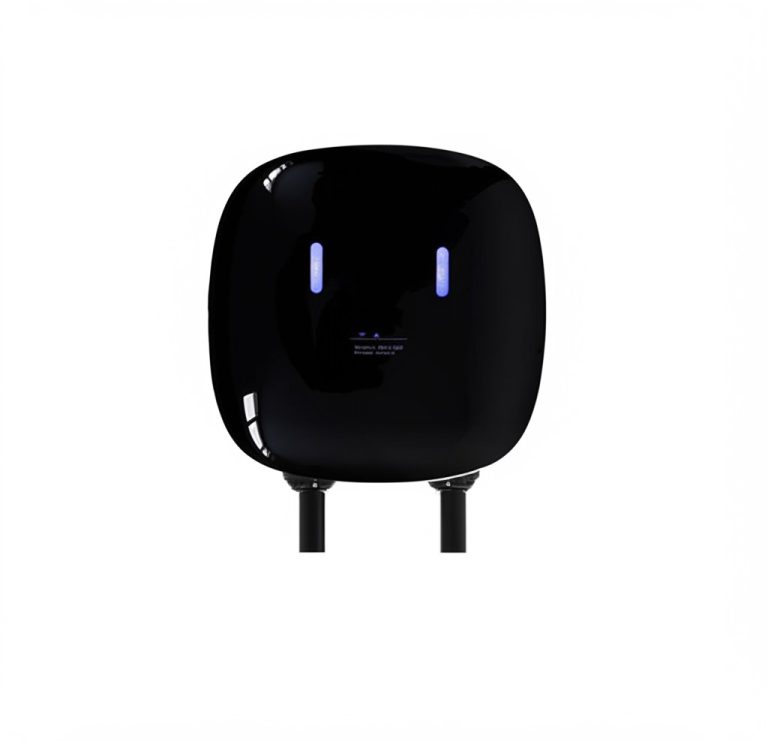
New Model Launch: STONE Wall Box EV Charger Smart, Stylish, and Super Compatible Introducing our brand-new STONE Wall Box EV Charger designed to blend sleek aesthetics with cutting-edge technology. Whether you're charging at home or setting up for public use, this charger offers everything EV drivers need — and more.
designed to blend sleek aesthetics with cutting-edge technology. Whether you're charging at home or setting up for public use, this charger offers everything EV drivers need — and more.
Technical specifications
Product specifications at a glance
Key parameters are grouped by function so buyers can compare power, installation, connectivity, protection, certification, and operating conditions without reading an unstructured text block.
Key Features & Benefits
IEC 62196-2 (Type 2) Compatibility
Choose your charging current with ease: 32A / 16A / 8A.
Broad Vehicle Compatibility
Supports 99% of electric vehicle models including Tesla, Volkswagen, Mercedes, Porsche, Ford, Chevrolet, and more. Available with Type 1, Type 2, GB/T, and NACS connectors.
Smart Buying Points
5M Type 2 Cable
Available
Plug & Charge
Available
AC30mA + DC6mA Protection
Available
Card Payment Support
Available
Dynamic Load Balancing (DLB)
Available
App Control
Available
OLED Display
Available
WiFi + Bluetooth
Available
Emergency Stop Switch
Available
5.8GHz Radar & Welcome Light
Available
OCPP 1.6J Basic Protocol
Available
Solar Energy Compatible
Available
Buyer Advantages
Sleek & Modern Design
A minimalist look that matches any environment — from residential garages to office buildings.
Smart Connectivity
Control charging sessions via app, track usage, and manage energy flow with built-in DLB and OCPP support.
Eco-Friendly & Future-Ready
Compatible with solar energy integration for sustainable charging.
Application notes
Ready to offer the next-level EV charging experience to your customers or fleet? Get in touch for a quotation, sample, or a product demo.
Project fit and buyer notes
7KW AC EV Charger for EV charging projects
7KW AC EV Charger can be evaluated as part of Amprisen's AC EV charger range. Confirm connector, power, network, certification, branding, and installation requirements before quotation so the final configuration matches the target market and deployment scenario.
Short answer: 7KW AC EV Charger should be evaluated by power level, connector standard, socket or cable output, communication method, certification market, installation scenario, and whether the buyer needs private or managed charging.
Specification focus for buyers
Decision area
What to confirm
Power and phase
Confirm 7kW single-phase or 11kW/22kW three-phase charging based on grid capacity and vehicle onboard charger.
Connector and output
Select Type 1, Type 2, GBT, or NACS planning, then choose socket or tethered cable output.
Smart functions
Confirm OCPP, RFID, app control, DLB, WiFi, Bluetooth, Ethernet, or 4G only when the site needs managed operation.
Metering and protection
Check Dynamic Load Balancing for shared power sites, MID metering for billing or reimbursement, and RCD requirements such as Type A, Type B, or 6mA DC leakage protection.
Use case
Separate private home charging from apartment, hotel, workplace, parking operator, and fleet scenarios.
Typical applications
Residential charging
Workplace charging
Apartment and hotel parking
Commercial parking and destination charging
Configuration notes
7kW, 11kW, and 22kW AC charging options
Socket or tethered cable versions
OCPP, RFID, app, and backend integration options
Wall-mounted and floor-mounted formats
Before inquiry
Confirm single-phase or three-phase input
Choose the correct AC family first: Apollo Type 2 wallbox, MONTA smart AC, floor-mounted commercial AC, or STONE wallbox
Decide socket vs tethered cable and LCD/TFT screen needs
Confirm OCPP backend, RFID, load balancing, and local certification needs
Procurement fit
AC EV chargers are the normal starting point for home, workplace, apartment, hotel, and destination charging because they balance installation cost, parking dwell time, and everyday driver convenience.
Market and standards notes
Select Type 1, Type 2, GBT, or NACS planning by country first, then confirm 7kW, 11kW, or 22kW power, socket or cable output, OCPP, RFID, app control, Dynamic Load Balancing, MID metering, RCD protection, and certification needs.
Implementation risks to confirm
Common risks are undersized grid capacity, unclear backend responsibility, wrong connector standard, cable management problems, outdoor exposure, and inconsistent installation guidance for distributors or installers.
Common buyer questions
Is 7KW AC EV Charger suitable for commercial EV charging projects?
7KW AC EV Charger can be reviewed for commercial projects when its power, connector, communication, certification, and installation format match the target use case. Share the site and backend requirements before quotation.
Can this AC EV charger be configured for OCPP or smart charging?
OCPP, RFID, app, 4G/WiFi/Ethernet, and remote monitoring requirements should be confirmed by model and project configuration. Amprisen can discuss backend compatibility during the inquiry stage.
What project details should be sent with an inquiry?
Send the target country, connector standard, power level, input phase or grid details, mounting type, communication method, certifications, branding needs, estimated quantity, and expected delivery schedule.
Amprisen
Project Assistant
Tell us what you need. We will collect the project details and route them to our sales team.