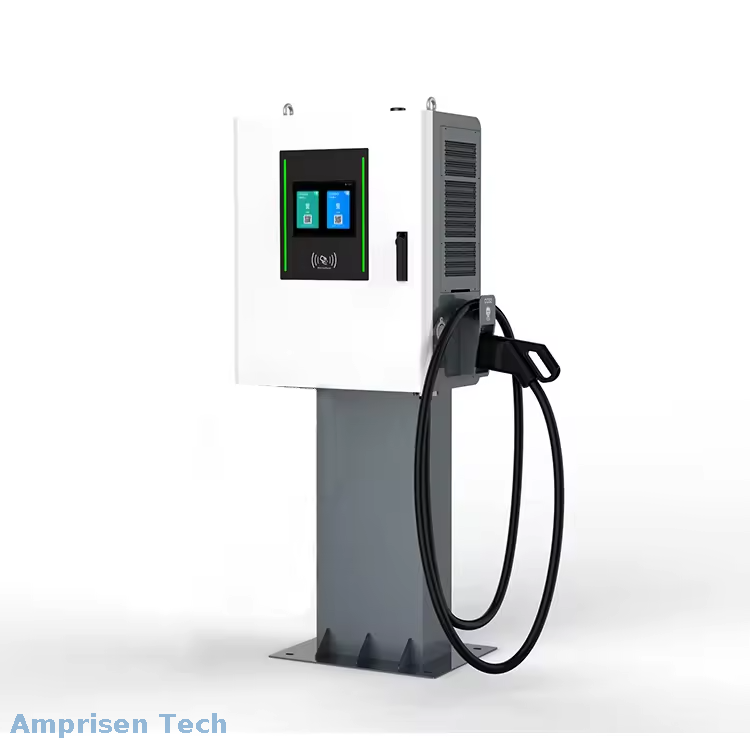
High-Performance 20-40kW DC EV Charger Introducing a robust and reliable 30kW DC EV Charger, designed for efficient and fast charging of electric vehicles. This charger supports a wide output current range of 32A to 100A, delivering significant power for rapid charging sessions. Operating at an input voltage of 380V, it is ideal for commercial and public charging infrastructure.
Introducing a robust and reliable 30kW DC EV Charger, designed for efficient and fast charging of electric vehicles. This charger supports a wide output current range of 32A to 100A, delivering significant power for rapid charging sessions. Operating at an input voltage of 380V, it is ideal for commercial and public charging infrastructure.
This DC charger features a standard TYPE2 interface and supports multiple charging standards including CCS-1/2, CHAdeMO, and GB/T, ensuring broad compatibility with various EV models. User convenience is enhanced through RFID, APP, and Plug & Play charging methods.
Technical specifications
Product specifications at a glance
Key parameters are grouped by function so buyers can compare power, installation, connectivity, protection, certification, and operating conditions without reading an unstructured text block.
Key Features & Benefits
High Power Output
30kW for rapid DC charging.
Wide Output Current Range
32A – 100A.
Universal Compatibility
Supports TYPE2 interface and CCS-1/2, CHAdeMO, GB/T charging standards.
Multiple Charging Methods
RFID, APP, and Plug & Play.
Robust Design
Metal casing with IP55 waterproof rating.
Wide Operating Temperature
-10°C to +60°C.
Open Communication Protocol
OCPP 1.6J / OCPP 2.0.1 for network integration.
Efficient Operation
Operates at 50Hz/60Hz.
Single Package Size
90x70x190 cm.
Single Gross Weight
350 kg.
Project fit and buyer notes
Small DC EV Charger for EV charging projects
Small DC EV Charger can be evaluated as part of Amprisen's DC EV charger range. Confirm connector, power, network, certification, branding, and installation requirements before quotation so the final configuration matches the target market and deployment scenario.
Short answer: Small DC EV Charger should be evaluated for DC charging projects by target power, connector standard, grid capacity, OCPP platform, payment or RFID workflow, cooling, service access, and uptime requirement.
Specification focus for buyers
Decision area
What to confirm
Site power
Confirm transformer capacity, available electrical upgrade, target charging speed, and expected daily utilization.
Connector mix
Choose CCS, CHAdeMO, GBT, or other connector options by vehicle fleet, market, and public charging requirements.
Operation
Define OCPP backend, payment, RFID, screen, network, remote diagnosis, uptime, and service responsibility.
Installation risk
Plan cooling, enclosure, cable reach, parking layout, safety clearance, maintenance access, and spare parts.
Typical applications
Public charging stations
Fleet depots
Highway and corridor charging
Dealerships, service stations, and commercial sites
Configuration notes
20kW to 250kW DC fast charging range
250kW-class high-power public charging project support
Compact DC and high-power public charging options
OCPP backend integration and remote management options
Commercial operation, fleet, and corridor charging configurations
Before inquiry
Confirm target power level and grid capacity
Select CCS, CHAdeMO, GBT, or market-specific connector requirements
Define OCPP, payment, RFID, network, and screen requirements
Confirm installation environment, cooling, certification, and service access needs
Procurement fit
DC EV chargers fit public charging, fleet depots, service stations, commercial corridors, and high-utilization sites where shorter dwell time is more important than the lower cost of AC charging.
Market and standards notes
Confirm site grid capacity, target power, CCS, CHAdeMO, GBT, or other connector standards, OCPP platform, payment, RFID, screen, cooling, enclosure rating, and service access before hardware selection.
Implementation risks to confirm
DC projects carry higher risk around transformer capacity, installation cost, backend operation, payment flow, uptime, spare parts, heat management, and maintenance responsibility, so site information matters before quotation.
Common buyer questions
Is Small DC EV Charger suitable for commercial EV charging projects?
Small DC EV Charger can be reviewed for commercial projects when its power, connector, communication, certification, and installation format match the target use case. Share the site and backend requirements before quotation.
Can this DC EV charger be configured for OCPP or smart charging?
OCPP, RFID, app, 4G/WiFi/Ethernet, and remote monitoring requirements should be confirmed by model and project configuration. Amprisen can discuss backend compatibility during the inquiry stage.
What project details should be sent with an inquiry?
Send the target country, connector standard, power level, input phase or grid details, mounting type, communication method, certifications, branding needs, estimated quantity, and expected delivery schedule.
Amprisen
Project Assistant
Tell us what you need. We will collect the project details and route them to our sales team.