
Commercial Floor-Mounted AC Charger Series Product Series Archive
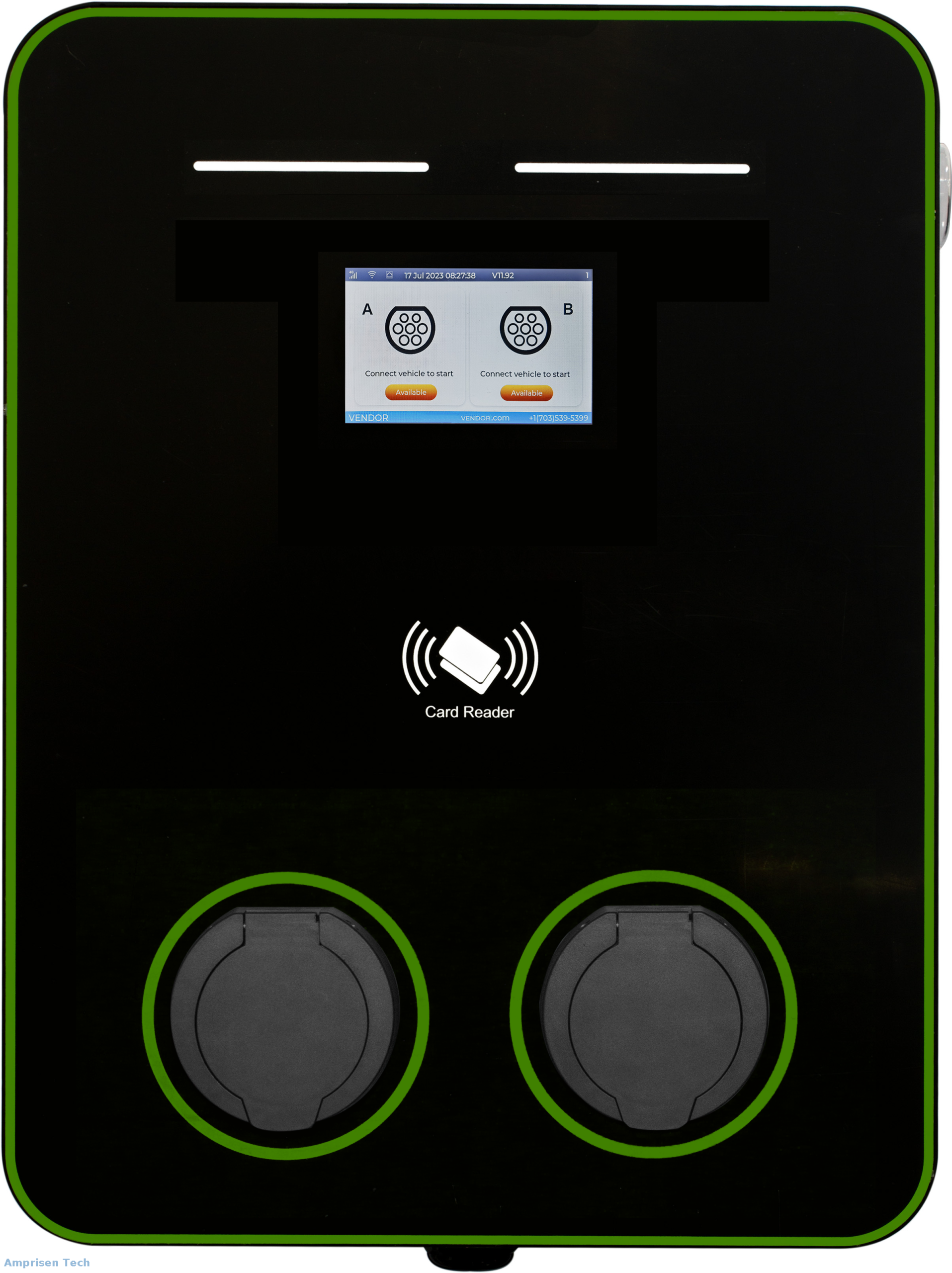
Commercial AC pedestal guide
Commercial floor-mounted AC charger stations for parking and destination charging
Commercial Floor-Mounted AC Charger Series covers pedestal, advertising, and double-socket AC charger formats for parking operators, workplaces, and destination charging projects.
Commercial floor-mounted AC chargers fit parking lots, hotels, offices, and destination charging sites that need pedestal installation, socket output, OCPP, RFID, and commercial user access planning.
Specification focus for buyers
| Decision area | What to confirm |
|---|---|
| Power and phase | Confirm 7kW single-phase or 11kW/22kW three-phase charging based on grid capacity and vehicle onboard charger. |
| Connector and output | Select Type 1, Type 2, GBT, or NACS planning, then choose socket or tethered cable output. |
| Smart functions | Confirm OCPP, RFID, app control, DLB, WiFi, Bluetooth, Ethernet, or 4G only when the site needs managed operation. |
| Metering and protection | Check Dynamic Load Balancing for shared power sites, MID metering for billing or reimbursement, and RCD requirements such as Type A, Type B, or 6mA DC leakage protection. |
| Use case | Separate private home charging from apartment, hotel, workplace, parking operator, and fleet scenarios. |
Key capabilities
- Floor-mounted and pedestal AC charging formats
- 14kW, 22kW, and 44kW project configurations
- Single or dual output planning
- OCPP, RFID, screen, and commercial operation options
Best-fit applications
- Commercial parking lots
- Hotels and retail destinations
- Workplace charging zones
- Charging operator AC networks
Selection checklist
- Confirm single or dual output needs
- Define pedestal, advertising, or floor-mounted format
- Confirm OCPP, RFID, payment, and screen requirements
- Check installation environment, cable management, and certification
Procurement fit
Use this commercial floor-mounted AC charger series page to shortlist product type, application scenario, target country, and buyer requirements before requesting a precise B2B quotation.
Market and standards notes
Confirm connector standard, power range, installation format, communication method, certification route, branding needs, and whether the project is residential, commercial, fleet, public, or distributor-led.
Implementation risks to confirm
Check grid capacity, installation constraints, backend responsibility, documentation, spare parts, service process, and sample testing before moving from product comparison to bulk purchase.
Common buyer questions
What power range is common for AC EV chargers?
AC EV chargers commonly cover 7kW single-phase and 11kW or 22kW three-phase configurations, depending on the target grid and vehicle onboard charger capacity.
Are AC EV chargers suitable for commercial sites?
Yes. Commercial AC chargers can use OCPP, RFID, app control, load management, and socket or cable configurations for workplaces, apartments, hotels, and parking operators.
When do AC EV charger projects need Dynamic Load Balancing?
Dynamic Load Balancing is useful when several chargers share limited site power, such as apartments, workplaces, hotels, or fleet parking. It helps distribute available current and reduce overload risk when multiple vehicles charge at the same time.
Do AC EV charger buyers need MID metering or RCD protection?
MID metering may be required when charging energy records are used for billing or reimbursement. RCD requirements depend on local electrical rules and project design, so buyers should confirm Type A, Type B, or 6mA DC leakage protection needs before ordering.
What should buyers confirm before ordering AC chargers?
Confirm local connector standard, input phase, max current, wall or floor mounting, IP rating, communication method, backend platform, certification requirements, and branding needs.